Tuesday, December 8, 2009

Is it Just Me?

Is it just me, or does anyone else think this is REALLY funny?

From Anonymous: "Good news is that I truly outdid myself this year with my Christmas decorations. The bad news is that I had to take him down after 2 days. I had more people come screaming up to my house than ever. Great stories. But two things made me take it down.

First, the cops advised me that it would cause traffic accidents as they almost wrecked when they drove by.

Second, a 55 year old lady grabbed the 75 pound ladder and almost killed herself putting it against my house and didn't realize it was fake until she climbed to the top (she was not happy). By the way, she was one of many people who attempted to do that. My yard couldn't take it either. I have more than a few tire tracks where people literally drove up my yard."

My husband forwarded this to me. Gotta love Marine humor.

Monday, December 7, 2009

LIFE IN THE VRAIL VOL. 1 Now available!!

Ack. Talk about getting your dates wrong! Today is the release day for my new print anthology, Life in the Vrail: Volume one. Life in the Vrail is the name of the "series" of books about characters set in the Vrail solar system. I hesitate to call my book a series because you don't have to read one to understand another. Characters overlap, but that's about as connected as the stories get.

Lurin's Surrender and The Thief of Mardu are combined in one pretty print edition in Volume One. Rumor has it Engaging Gren and Seriana Found might be seeing print in volume two.

All four stories were previously released with another publisher but have been extensively revised and reedited for Total E-Bound. Click here to read more...

And to see what else Total E-Bound has out, to include new audio books, e-releases, print books, and free reads, click here.

Happy Monday!!

Sunday, December 6, 2009

The New Look

I've been working on my website for a while, but it's never had the look I really wanted. So I hired Psyche designs a while ago to make a website for a pen name I'd been considering. The pen name didn't pan out, but the web site sure did! The website is still under construction, but the blog is taking off. Huge thanks to Tina, and stay tuned for more...

Thursday, December 3, 2009

Promotion--Love it or Hate it?

So far this week, I've discussed the creative "birth" of a manuscript, the editing process, and the various forms and information needed to publish the book. At this point, the book should be ready to be read by millions... If they know my book exists.

This will be a short but sweet section about promotion. To many authors, it's a love/hate relationship. Heck, I love getting my name out there, but I often don't like to waste valuable writing time with promotion.

These are several methods by which I promote my work:
  • Publisher websites
  • Publisher Yahoo groups--thought it's encouraged to not do drive-by promotions, but rather to participate in these publisher groups to get to know the readers. I admit, I don't do too much of this. I need to be better and find the time.
  • Newsletters. I have my own newsletter I put out monthly, and am an editor for the Samhellion, Samhain's newsletter (which is offering a ton of free holiday reads, by the way, so check it out.)
  • Contests. I try to run a contest each month for newsletter subscribers, as a thanks for subscribing. But this can get pricey if I'm not careful. (My winners from Finland and the Philippines in 2007 blew the lid off my contest budget. Now I do mostly US-only shipping, and reward overseas folks with online GCs, that or publisher gift certificates.)
  • Buying ad space on reviewer sites. I am a member of The Romance Studio and try to advertise new covers there monthly. I'm also a big fan of Romance Junkies,which does great reviews and is REALLY author friendly. Cover ads there as well.
  • Interview. It's not so easy to schedule interviews anymore, not since epublishers are everywhere these days. But I have a big one scheduled in Jan or Feb 2010 with JERR, Just Erotic Romance Reviews.
  • Website. Keeping an up to date website is key to promoting myself, especially since most of my books are electronic (though I also have several in print.) I can't stand going to an author's site or blog, only to find it hasn't been updated since 2008.
  • Blog. Eh, I'll leave this open to interpretation. How many folks actually read this? Who knows, but I'm sharing anyway. And hey, Blogger is free!
  • I recently joined Goodreads. We'll see how that goes. It's an online network for people who love books and want to share opinions, reviews, and the lowdown on the written word.
  • RT Magazine. Considering how pricey the print ads are, I only advertise there if I have something in print and am really pushing it. But I'm not sure how much this helps.
  • Bookmarks and pens. Bookmarks rock. I use them all the time, and I'm always losing them. I figure if you read like me, you probably lose them too. I also get them professionally made. (Don't ask about the ones I made for myself. They screamed "home grown." Now I let Earthly Charms work their magic.)
Promotion, do I love it or hate it? A little bit of both. They say to remember something you need to see it at least seven times. So I've got to keep putting my name out there, and not as an idiot who sends too many invitations to people to join her at Goodreads (HUGE apologies to everyone, it was an accident!) but as an author of romance readers enjoy.

Now I must go. I have to find a Screature for my son. It's a silly little dinosaur that roars and squirts water at you. It's flying off the shelves and Christmas is coming. Man, that kid is SO going to owe me when he's older. And don't think I won't let him know it.

Wednesday, December 2, 2009

Administration, Yippeeekkk

Today I thought I'd briefly discuss the horror, I mean, several points of publishing that writers and aspiring authors don't normally mention, because they're rather mundane. The administrative aspects to editing.

These detailed necessities make selling the book possible. But I'm honest to admit I loathe having to do them. I'd much rather be writing my story, not encapsulating it into a 100 word blurb.

I call these items administrative, for lack of a better term, because many of them have to do with marketing and distributing the book, not writing or editing it.

Art work, blurbs, bio's, and excerpts--those things that are vital to the art of selling the book. Much of it goes on the publisher's website to promote and distribute the work. (I'll talk website because I'm familiar with small press and electronic books, as opposed to larger scale print-only publishing.)

Once I've completed a manuscript, sent it off to my editor, had it accepted, and signed a contract, I'm supposed to fill out several forms. Every publisher calls them something different, but they basically fulfill the same needs: cover art, blurbs, excerpts, author biography.

Cover Art forms are terribly important because the author actually has input on what the book will look like. I guarantee 98% of romance readers out there will look at the back of a book based on cover. An ugly cover can kill your chances to find new readers. Since the publisher is nice enough to ask for my opinion, I must fill out minute details about my characters, setting, the synopsis, what I want to see/don't want to see, and anything else I can think of to make the cover reflect the actual writing.

I love the fact that my opinion of the cover counts, but I really hate the work that goes into the form. Half the time, I have to reread sections of the book to get answers to what the artist might need to know. Trust me, I'm not complaining about getting input on my cover--at all. I'm just saying it's not my favorite thing in the world to do.

Many people have asked, how much input do you get? Well, I've had to tell the publisher on quite a few occasions that the hero is too wimpy, the heroine too weird looking, blonde instead of brunette, or some such. They can change some things to a degree, but at some point they give you choice A or B. Pick one. End of story. Still, if you don't ask, you won't get the chance to change what bothers you.

Next, there's the blurb sheet. The publisher needs to know, in X words or less, what the story's about. There's the hook, the one liner that grabs a reader's attention. "In a Decision between fight or flight, love makes the final decision." From In Plain Sight, by book about raptor shapeshifters.

Then there's the hundred word blurb, for advertising and marketing.

Shapeshifter Cullen Whitefeather has been in love with Sarah since he first laid eyes on her. But despite his brawn and sharp talons, Cullen gets tongue-tied around the beautiful woman. When circumstances throw them together to ride out a storm, the gruff man tries to show Sarah the truth – she is his mate. He does his best not to scare her away. Then his dysfunctional family returns from a trip abroad, and the raptor clan tries to punish Sarah for his interference. But if there's one thing Cullen's good at, it's a fight. And he's not letting Sarah go without one. (In Plain Sight)

And the actual blurb, the meaty summary meant to entice a reader to buy, which can usually be found on the publisher's website detailing the book, or on the back cover of a print edition.

Cullen Whitefeather is Ac-taw--a fierce golden eagle shapeshifter. The ultimate predator, he doesn’t shy away from confrontation…unless it involves one tempting, smart-mouthed woman. The woman destined to be his mate. The woman who doesn’t even know he’s alive.

Sarah Duncan made one mistake years ago and hasn’t stopped paying for it since. Tired of the town’s treatment, she finally tells the truth about what really happened and pays a hard price. Her clan wants to silence her. Permanently.

Rescue comes from a completely unexpected source—Cullen, a man who can barely seem to string two sentences together. Yet his fierce protectiveness, compassion, and bewitching touch are worth more than a thousand words.

With Sarah so close, Cullen is losing his mind—and his heart. She says she wants to leave, and the raptors want her gone. But if there’s one thing Cullen’s good at, it’s a fight. And he’s not letting her go without one. (In Plain Sight)


Once the blurb sheet is done, there's also the author biography sheet. This usually only has to be done once, the first time you sign on with a publisher. My bio is short and sweet, and hasn't changed in several years. I still read paranormal, I still realized romance was my first calling. Right.

And finally, I finish with the excerpt. Usually, the publisher will mandate that an excerpt not exceed so many words (in the contract.) Some publishers want no mention of that "climactic" moment, if you know what I mean. Other publisher ask for two excerpt, one PG and one R rated. Personally, I like to give a sexy excerpt, but not one that lets the reader have juicy details or sexual culmination. The excerpt should tease the reader into wanting to read more.

These are the nuts and bolts behind the actual writing. I didn't delve into contracts for several reasons. I'm not a lawyer. Most contracts are confidential. Not every contract is the same. But one thing I can state, unequivocally--No matter how many contracts you've signed in the past, you need to read through each and every detail of whatever's put in front you before signing, and that's just good business sense.

Tuesday, December 1, 2009

The Editor and Editing

Happy Tuesday to you. Today I'm going to discuss editing. To some, edit is a "four-letter word". To others, it's a grueling though rewarding process to perfect translated thought. Any way you look at them, edits are the lifeblood of good writing.

I write for several publishers, and each publisher assigns me an editor I consistently work with on each project. Each of my editors has different quirks and quibbles. But one thing they all have in common: a thorough editing process. **This is key to finding a good place to publish your work. Any place that considers itself a professional publishing house that refuses to edit work is either a vanity press, a self-publishing business, or a "publisher" who puts out shoddy work. Take heed.**

For an example of what I go through once my work is finished, I've chosen one of my favorite editors! "Fave" has been professionally editing my work for two years. She and I have an open writing relationship. I can disagree with her changes so long as I explain why, and she always listens. (I've gone round and round with line editors over my refusal to minimize the "M" when I write about Marines--U.S. Marines, the proper noun, not the adjective.)

Fave gets it. And she supports me, even when my ideas may look odd on the surface. It's that two-way communication that allows us both to be successful. And she's given me many, many word choices and changes that have cleaned up my work. She doesn't take offense if we disagree, and neither do I if she wants to delete a line I absolutely love. She'll always explain why she's doing what she does, and that helps a lot. Added to that, she won't just change "a" to "the" for no reason.

Oh, and all of my editors use MS Word's Track Changes feature. A must have, in my opinion!

Here's how it goes. Putting it all together...


After going through it intensively, I submit my book to Fave. She receives it, lets me know, and I sit back and wait.

On Fave's end, she reads the story not only for grammar, but for content. Plot holes, inconsistencies, sentence structure, that hated comma, and the publisher's style standards. (Note: every publisher is different. I can't tell you how many times I've had to change "blonde" to "blond" depending upon who I'm writing for.) She'll read and edit the story anywhere from one to three times before sending it "down the turnpike," as she likes to call it.

The manuscript then goes to Line Edits, where a line editor goes through the text. Once done, the line editor gives it back to Fave, who gives it back to me. I go over the work, send it back, Fave reads over my changes, and we're either fixed or we go through the process again. After the line editor has finished ripping through, er, I mean going through the story, a proofreader takes hold of it.

The proofreader does the same thing. Looks it over, makes her comments, sends it to Fave, who sends it to me. I go over the MS, give it back to Fave, who reads it, then sends it back. This process may be repeated. Yep, really.

The proofreader, when done, sends the book to Formatting. It will rarely return from Formatting with problems, thought that can happen. But generally, once it's hit formatting, I can consider my edits done.

All in all, this process can take several weeks. Most publishers like to have their stories edited and ready to roll months before they publish. This way, there are no last minute emergencies or changes interfering with the publishing schedule, which is normally set months/years in advance. Good editing takes time, especially when you can have four people or more eyeballing your story.

Honestly? It's an exhausting process. I'm a fairly clean writer (Father taught English, I majored in English at college, call me a grammar Nazi), but they still find mistakes I've made as far up as the proofreader. Having so many different sets of eyes on the work makes it that much cleaner once it's been "filtered."

Having been with publishers who edit and others who don't edit, I can truthfully say my work is ten times better in places with people who care about putting out quality product. Edits can make or break a work. And it's funny, because as a reader, I do care that I'm reading the very best money can buy. When I catch spelling errors and inconsistencies in a novel, it really throws me, because I'm expecting the editor, not so much the author, but the the publisher's editors will have caught this.

Now, all of my publishers are different. But each of them pretty much follows the above process as concerns editing. Questions? Comments? Then on to tomorrow where I'll discuss the administrative details of publishing, namely, contracts (in general), artwork, blurbs and more. And thanks again to Fave.

Monday, November 30, 2009

Birth of a Book

This week, I'm posting about the formation of a book. From first word to final product, from a small press author's point of view.


Today's Post: The Birth of a Book
  • The Dossier
  • The First Chapter
  • The Ugly Middle
  • The ReDo
  • Rushing to the End
  • The End
  • Constant Edits
Okay, many people do this many ways. I'm going at this from MY experiences. This is the way I do it. No one way is right, it's whatever works for you, personally. That said, I'm a plotter and a pantser. This means I'm terrific when it comes to plots--that I make up as I go along.

Kind of crazy, but exciting. Still, before I put one word down on the computer, I have a background "dossier" if you will, on my characters.

The Dossier
I like to draft an ABOUT document. In it, I name and describe my characters, traits, issues to overcome, physical and emotional descriptives, and ages. For some reason, I get stuck on ages. They have to be juuusssttt right. Kooky, I know. Then I give a blurb about what I want the story to be about. Five military men who volunteer to be supersoldiers, caught in a conspiracy and needing the love of good women. Beginning, end state. A kind of rough path to get there. All of that might take up a whole paragraph. If I'm feeling frisky, I'll even briefly describe what I'd like to see happen in each chapter, figuring on a ten to fifteen chapter book (think 45-60K words). The longer the story, the more details I like to begin with. Easy-peasy. Then I run with that.

The First Chapter
I do normally toy with an idea in my mind for a few days before I even start writing anything. So once I have those protagonists' names and ages, I'm ready to go. With the story brewing in my head, the words flow. I can, on a good day not interrupted by children (who should be at school), normally bang out anywhere from 7-15K. On a great day I can hit 20K. That's morning to evening writing, and not every day is a great day.

I have friends who work, and friends who write at a slower pace. Just making sure you write every day is good. So you jot down 150 words, that's 150 words toward finishing your book. Don't worry so much about word count, just WRITE.

The Ugly Middle
To catch myself up on mood and pacing, I reread ONLY the part I've worked on the previous day, edit, and move on to the next part of the story. This way I get extra editing in before the book is even finished. Unfortunately, there comes a point when the story is just running around in circles. Happens on every book. I can't move forward. I hate the story. The characters aren't ringing true. Sometimes I need a breather and work on something else. Other times I'll take a break. Walk the dog, listen to music. (I like to write in silence, only the hum of the fish tank to accompany the clang of computer keys.)

When I return to my story, I can normally plow through it. But when I can't, I take drastic action. The Re-Do.

The Re-Do
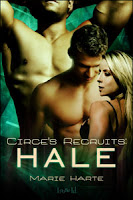
Though I hate doing it, sometimes I just have to delete. Not just words, but whole scenes, pages, even a chapter, if need be. Rewriting the part that sticks fleshes out the rest of the story. When writing Circe's Recruits: Roane, I had this kick-*ss sexy scene where everyone was going, er, getting down. Sexual healing, at its finest. And it just didn't fit. The heroine needed to bond to her mate first and foremost. The rest would come later. And it did.

It hurts to cut out a chunk of something you've created. But again, if it doesn't fit, you can't make it fit. I've learned this the hard way. I'd rather rewrite a passage than lose a day or two of writing because I'm so frustrated. Time and experience has shown me when to see what's not working.

Rushing to the End
This sounds negative, but what I meant is that once I'm past my ugly middle, I can roll straight through to the end. The characters take on their own voices and move the way they need to. The end is in sight. I normally write a lot more on a daily basis when I'm near the end. When starting the book, I have a desired length in mind. Nothing definite, but novella, short story, and novel are all different feels. When it's a novel, whether it's 40K or 60K, that's up to the characters to decide.

The End
It's almost orgasmic. That rush, that sense of worth. I LOVE finishing a book. It gives me leave to celebrate, and I no longer feel guilty for watching television or not staying up super late to work. A reward in itself. But once I type that final period, I don't immediately rush to send the story to my editor.

Constant Edits
I wait a good week after finishing the book, reread, reedit, then wait. Edit again, and again. If it works, I send it. I'm not one of those folks who writes five drafts of the same story. I can't do it. That would kill me. Yet I know (crazy) people that do. Hey, it's whatever works for you. Still, I edit throughout the story. Writing it, reading it, and rereading it. But I miss a lot, and I'm a grammar Nazi. I've found that time and distance from my project gives me a better, fresher perspective to fix the small flaws in syntax, grammar or consistency.

Once it's all done, I send it to my editor. And then it's time to repeat the process all over again. Yippee.